.svg)
The Control Plane for the Agentic Enterprise
Agents run where people already work, on the same systems, with none of the onboarding. Island now governs what they do across every surface they touch.
.png)
At the end of 2025, AI agents became practical to run at enterprise scale. Models got good enough to power them without custom engineering, and adoption spread into every function within months.
Governance did not keep pace. The tools enterprises trust for security were built to watch people or code. An agent reads files, calls tools, runs commands, and acts on its own.
Today Island is announcing the control plane for the agentic enterprise. One policy engine, one audit trail, and one set of rules for every agent running in your environment.
Agents never got the handbook
Before agents, AI governance mostly meant keeping sensitive data out of a chatbot.
Agents changed the shape of that problem. They act instead of answering, and they run in a loop until the task is done. Island research puts 53% of AI interactions at autonomous actions rather than a person typing a question. None of those agents went through onboarding. They do not know your policies or the unwritten rules people pick up over time, and they will finish the task they were given by whatever route works.
Three things followed. Cost moved outside anyone's control, because every tool call and retry adds tokens nobody approved. A McKinsey survey found that 93% of respondents have reported exceeding their AI budgets. The attack surface grew past what policy covered, as employees connected personal cloud drives to agents and installed MCP servers from anywhere. Governance disappeared: no inventory of which agents exist, no policy over what they can do, no record of what they did.
Approval workflows have not filled the gap. Island found 93% of prompts put in front of a human reviewer get approved, which makes the human in the loop a formality.
The supply chain underneath is no better. Island scanned nearly 34,000 public MCP servers. One in three carries a high or critical severity finding, and 92% of the owners have no verifiable organizational affiliation.
Everyone sees one link in the chain
Every vendor approached this with what they already had. Network tools see the wire, not the endpoint. Endpoint detection and response sees the endpoint, not the prompt behind it, and nothing inside a browser. Identity tools see which credential touched a resource, not why.
Each sees something real. None sees the full chain, from the prompt that started it to the data that moved as a result.

A coding agent runs an unapproved skill that pulls in a malicious package, reads a sensitive file, and sends it to an external domain. An endpoint tool catches the first part. A network tool catches the last. Neither sees the sequence, so incidents like this surface weeks later.
Island already sits where agents run
Island runs in the browser, on the endpoint, on the network, and through integrations. Agents work in those same places, so the policy engine that already applies there applies to them.
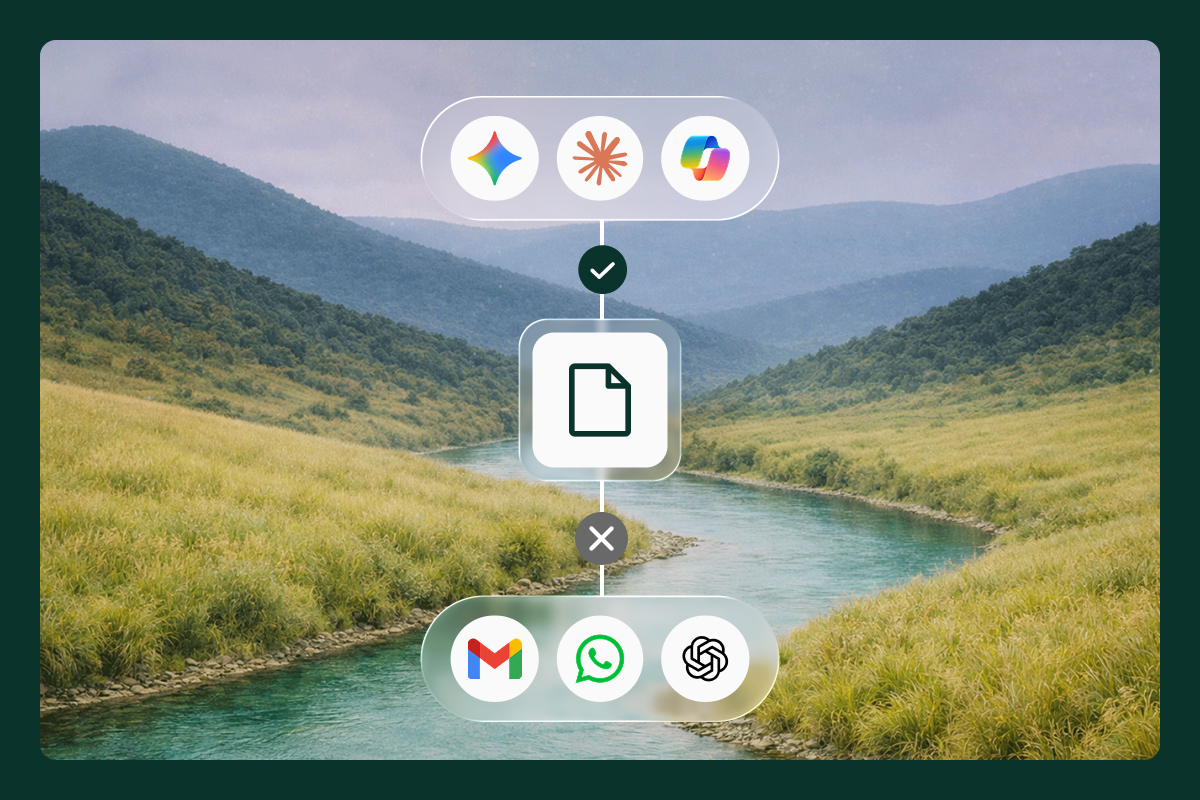
Seeing the whole sequence means there are several places to stop it. Flag the skill as malicious and the agent never runs it. Island can also govern tool calls and rogue actions agents take.
The browser matters for a second reason. When an agent clicks through a web app the way a person would, the traffic looks identical from the network or the endpoint. Only inside the browser can policy tell the two apart.
Five areas, one policy engine
Those control points feed five areas.
Agentic Endpoint Posture discovers every agent on the endpoint along with its MCP servers, skills, packages, and extensions, then removes what it flags.
Agentic Identity inventories the non-human identities agents run as and issues just-in-time credentials through an MCP gateway, so no agent holds a standing key.
AI Protect enforces policy inline across prompts, tool calls, files, and sub-agents, and tells an agent why it was blocked so it corrects itself.
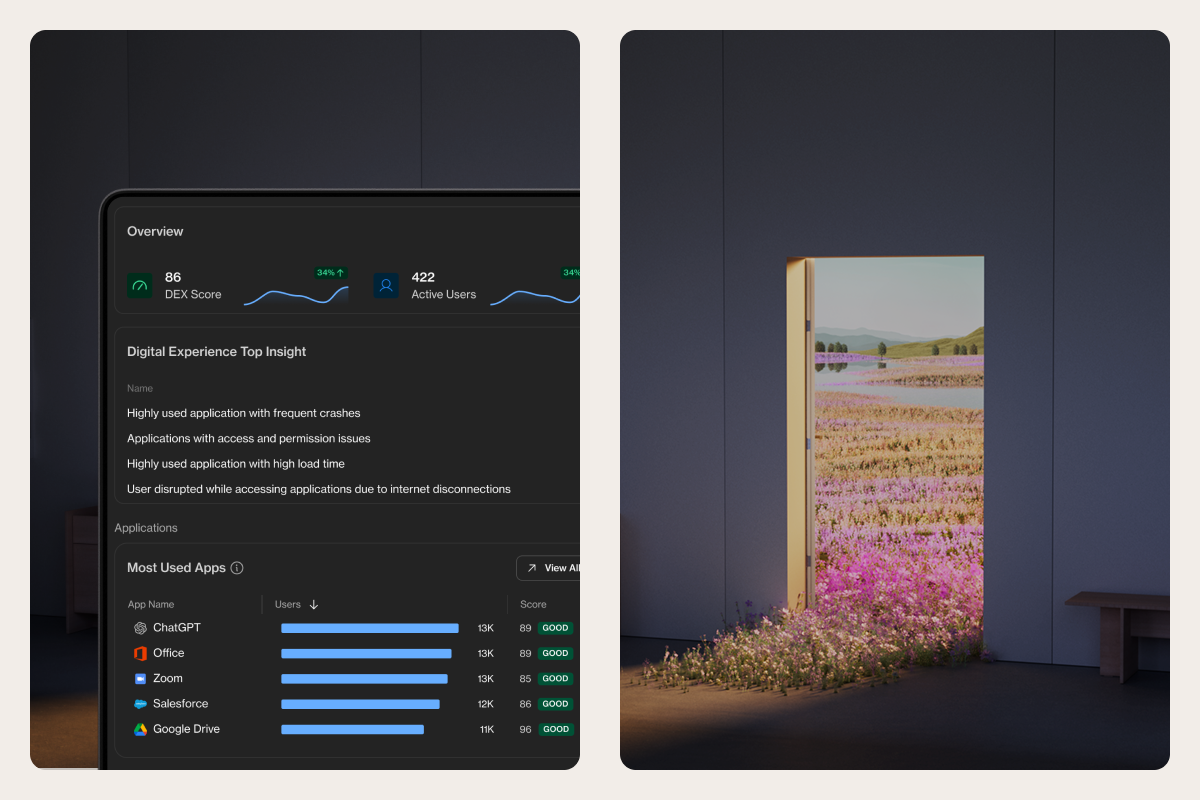
AI Cost and Experience tracks usage, cost, and performance per agent, from real sessions rather than estimates.
Vibe Publishing allows users to safely publish internal tools built with vibe-coding applications.
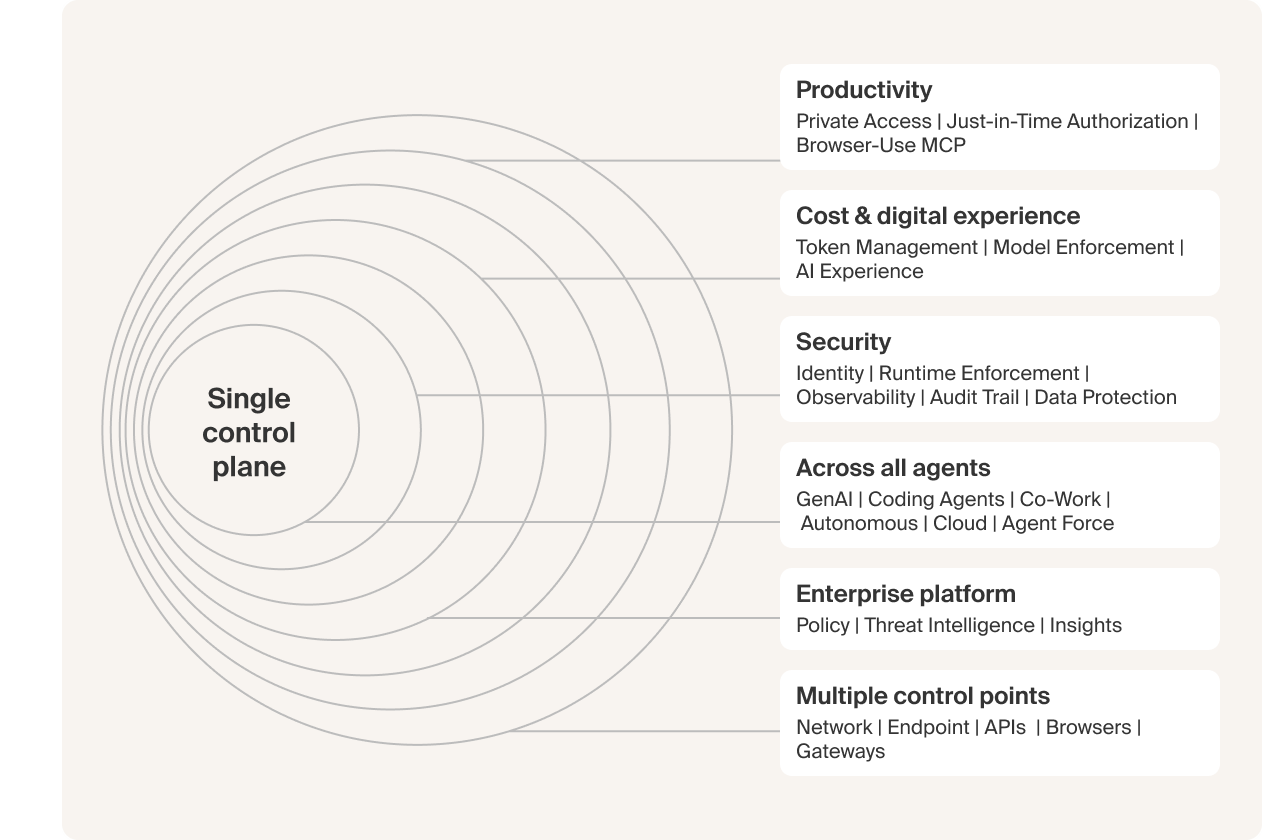
All five run on the same policy engine and write to the same audit trail, exportable for SOC 2, ISO 27001, and EU AI Act conformance.
Rules for the workforce you did not hire
Network tools, endpoint detection, identity products, and vendor consoles all cover real ground, and Island is not replacing any of it. None of it was built to govern what an agent does the moment it calls a tool or moves data somewhere it should not.
Agents already have the run of your systems. Island gives them the handbook, on every surface they run on, for the agents you know about and the ones you have not found yet.



.png)
.svg)
.svg)

