Island Enterprise AI
The control plane for the AI workforce
When you redesign the network for the end user, you backhaul less, route smarter, and see more. That's the perfect packet. That's Modern SASE.

The world’s leading enterprises run on Island.
.png)
.png)
.png)
.png)

.png)










The new reality of work
AI agents are no longer limited to developers. Every employee now has access to them. The enterprise runs on swarms of concurrent agents (chat, coding, copilots, autonomous) that read data, call tools, and trigger workflows at machine speed. The security stack wasn't built for that.
of the AI interactions are autonomous actions
of prompts approved, the human in the loop wasn't in the loop
MCP servers carry a high or critical severity finding
MCP server owners have no verifiable org affiliation
The governed action
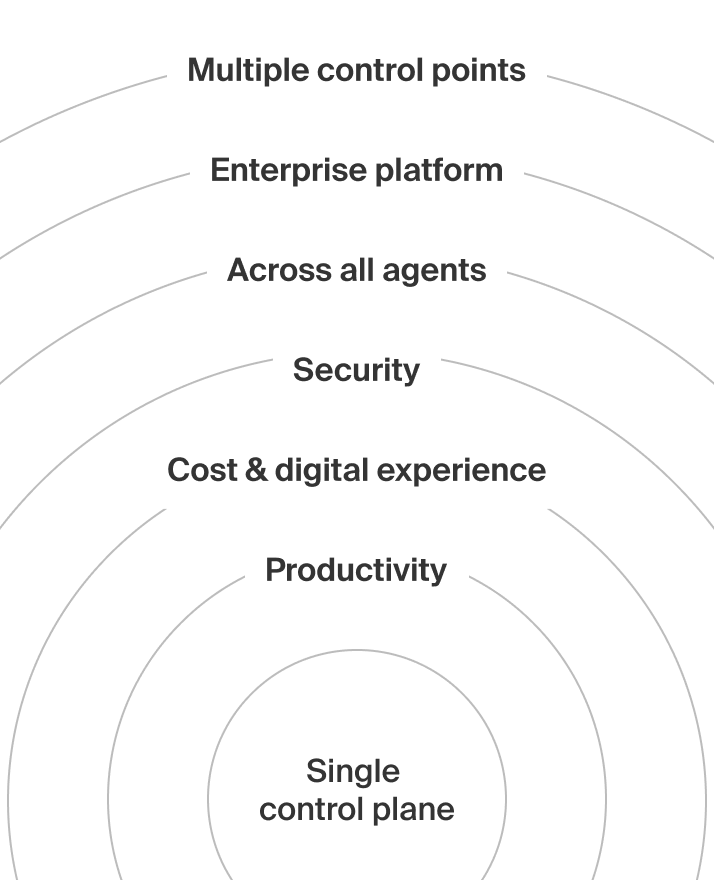
Island sits where AI is used: browser, endpoint, network, every tool call. One control plane captures the full chain, from prompt to tool call to file. One policy for humans and agents.
The Problem
AI adoption is outpacing control
Blind to agent actions
Agents act autonomously, able to alter production environments. Security teams have no way to see what the agent did or why.
Data movement, unmanaged
Agents pull data from Salesforce, Jira, and Slack into tools no one vetted. It crosses every boundary with no one watching.
Shadow AI is everywhere
Employees try new AI tools every day, mostly un-tracked. Security can't guide usage and IT can't measure real value.
Every tool sees only a slice
The network sees a file leave, the endpoint sees a script run, but neither connects the prompt injection that caused it.
The Solution
Every human. Every agent. Governed.
The posture, identity, protection, visibility, and productivity gains already built for every person in the organization extend just as naturally to every agent acting on their behalf.
Agentic Endpoint Posture
Discovers every MCP server, skill, and extension running on the endpoint, and removes the ones flagged as risky.
Agentic Identity (NHI)
Inventories every non-human identity in use, analyzes its risk, and issues just-in-time access instead of standing credentials.
AI Runtime Protection
Inspects every prompt, tool call, and file, blocks threats inline, and tells the agent or the user why so it corrects course instead of just failing.
AI Experience & Cost Intelligence
Tracks real usage, cost, and performance per person and agent, and acts on waste instead of just reporting it.
Vibe Publishing
Gives vibe-coded apps a home inside Island, so each one arrives with single sign-on, data protection, private access, and a full audit trail.
Enterprise Browser for Agents
Allow agents to access and interact with web content with full governance, including visibility, policy enforcement, data protections, and more.
Every AI action is known
See what every human or non-human does. Inventory what exists.
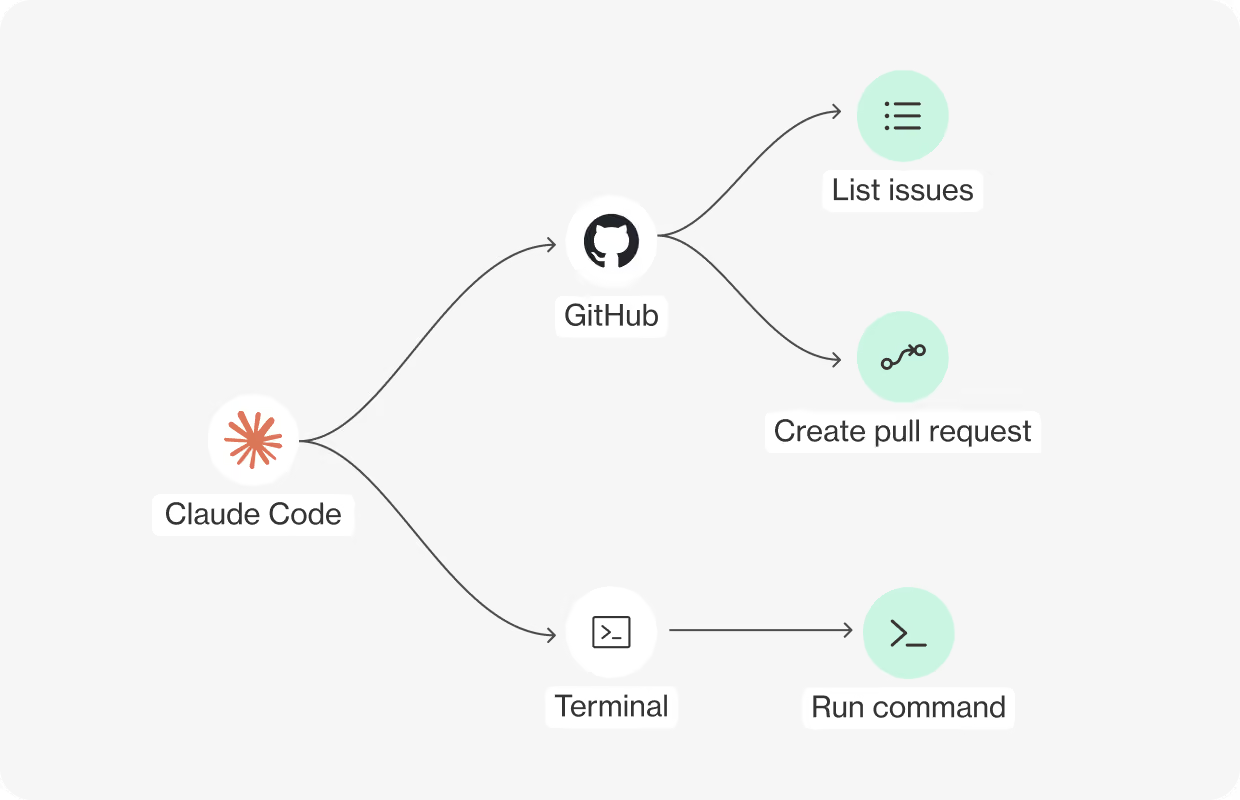
- Discover every AI tool, NHI, agent, MCP, and Bash command
- Audit every prompt, response, tool call, and tool response
- Map agent identities to users, sessions, and access paths
- Scan installed browser extensions and code packages
Inline threat defense
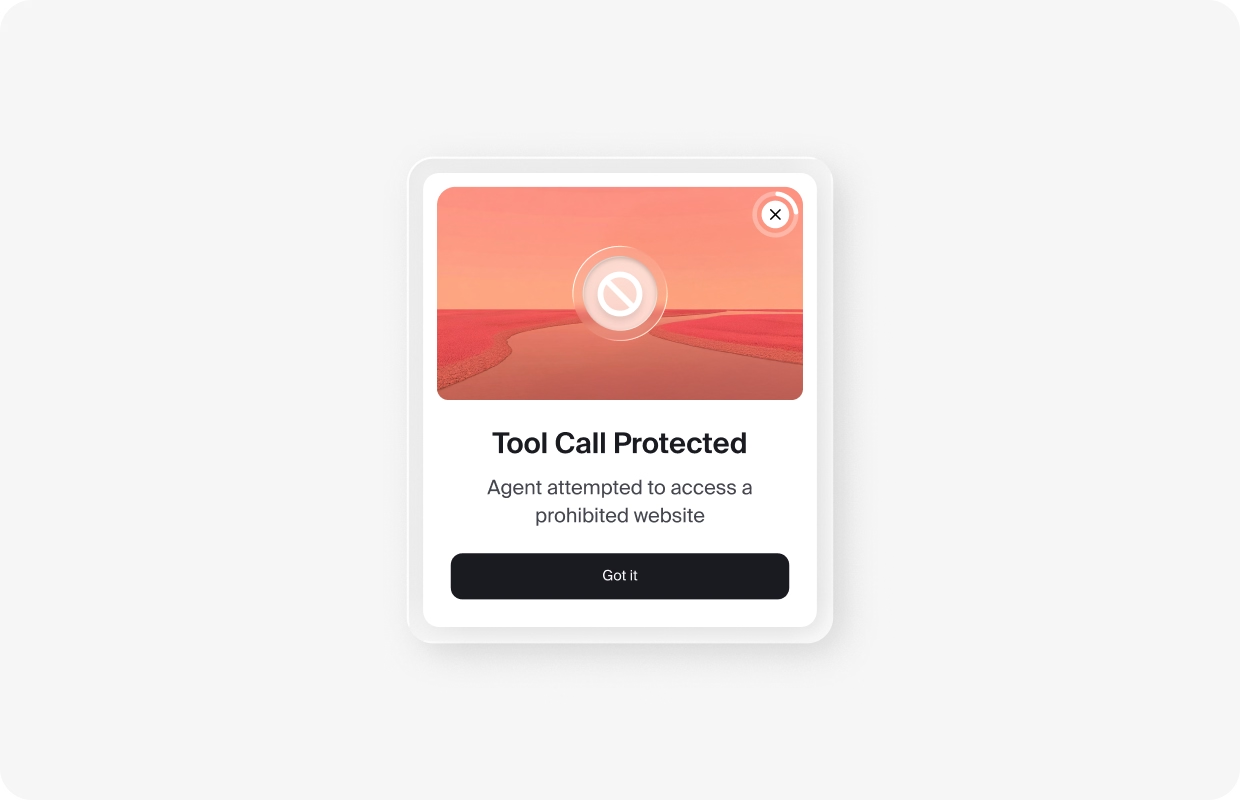
Detect threats before agents act on them.
- Block prompt injections and jailbreaks before execution
- Detect and block malicious URLs across agent interactions
- Flag compromised MCPs and skills with unified threat intel
- Prevent unauthorized Bash execution and command injection

Agent boundaries
Control what data moves, what agents do, and who they act as.
- Enforce DLP and content moderation on every interaction
- Detect and redact PII on prompts, files, and tool calls
- Control action types per tool: read, write, or execute
- Restrict inherited permissions with time-boxed access
Know your AI spend and usage
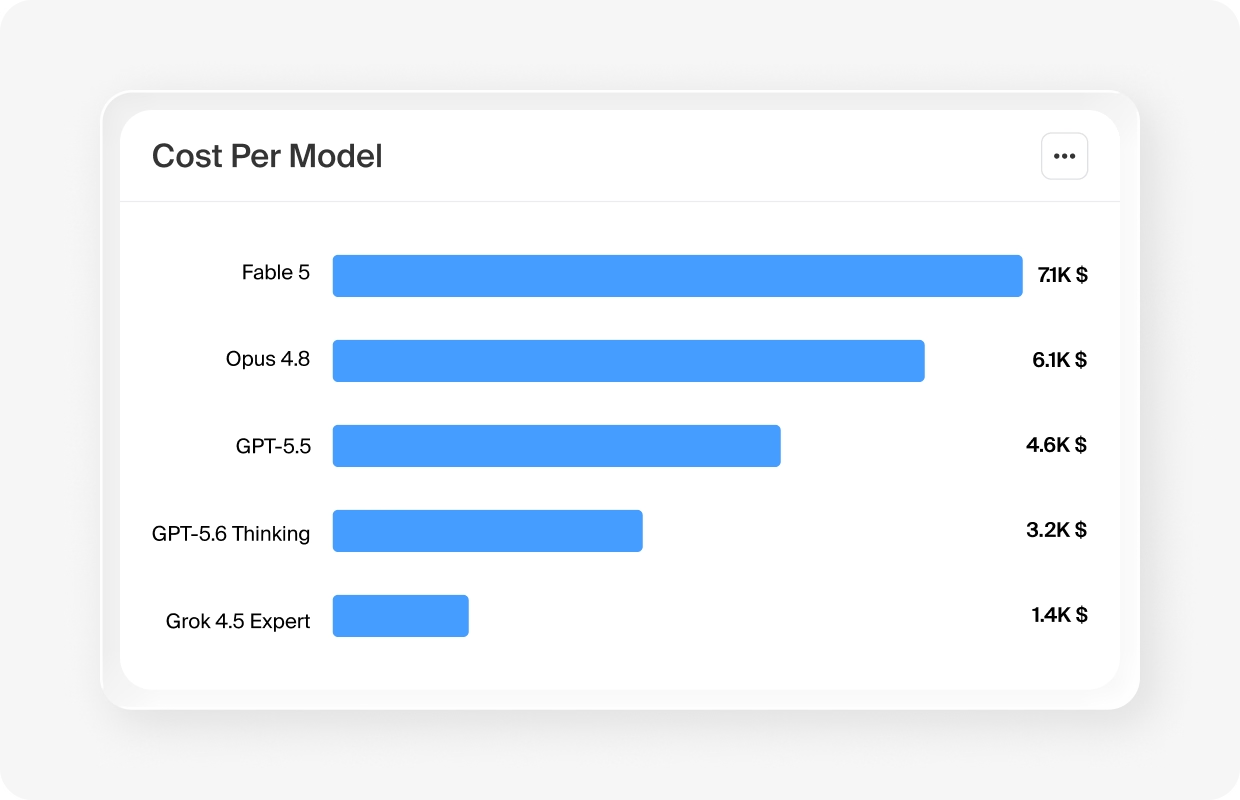
Track what AI costs and whether it pays back.
- Track AI token spend and detect waste per team & project
- Flag when premium models run tasks lighter models could handle
- Identify underused AI tools and pinpoint adoption barriers
- Monitor AI tool performance and its impact on productivity

Unblocking AI access
Say yes to AI. On your terms.
- Extend AI governance to BYOD, contractors, and partners
- Grant just-in-time access scoped to each agent and task
- Govern browser actions with policy via Browser-use MCP
- Publish internal MCP servers without exposing API keys or network


360° of visibility and control of agents
.svg)
Island Enterprise Browser
Sees and governs every AI interaction on the web.

Island Extension
Extends that same governance to any browser.

Island Desktop
Delivers AI visibility and control on every endpoint.

Island Network
Applies inline inspection and policy for every AI tool and agent.

Island MCP Gateway
Governs every MCP call with identity, policy, and audit.

LLM Gateway Integrations
Integrates with your LLM gateway to enforce policy.

Compliance API Integrations
Surfaces AI vendor conversations and usage data.

EDR and MDM Integrations
Extends AI governance through tools already deployed.

LLM Inference Hooks
Enforces inline policy checks before model inference.

Direct API
Build governance directly in coded agents using Island APIs.

Applicative Hooks
Enforce inline policy and provide visibility into agent operations.

See more. Enforce deeper. Cover everyone.
Full interaction visibility, dual-layer enforcement, and one policy framework for every identity.
Engineered detection
Purpose-built classifiers and models trained for each threat type. Accurate, efficient, inline enforcement.
Complete interaction coverage
Tool calls, responses, files, skills, MCP invocations, and prompts, correlated end to end so no action happens in isolation.
One framework, every identity
Humans and non-human identities governed under a single policy framework. One console, one audit trail, no gaps at the edges.
Built for how enterprises actually use AI
.avif)
AI Enablement
Let employees use approved AI tools while keeping PII, IP, and financial records out of prompts and outputs.
Internal System Access
Let any agent navigate legacy, no-API internal apps under full DLP, redaction, and audit via Browser-use MCP.
Agentic workflows
Apply identity and device context to AI agents operating at scale, with audit trails and human-in-the-loop controls where risk is highest.
Shadow AI
Discover every agent, every MCP, every tool. Inventory MCP servers, coding agents, skills, and models with risk-scores on what's running
AI Security
Block adversarial prompts targeting agents and the data they touch, including indirect injection from web and document content.
Just-in-Time Access
Time-boxed, context-aware credentials for agents. No standing access. No over-broad scopes inherited from the human user.
Compliance
Content-level audit records tied to user, device, agent, and policy. Exportable for SOC 2, ISO 27001, and internal review.
Contractors & BYOD
Apply the same AI governance policies to unmanaged devices and third parties without MDM, VDI, or heavy endpoint agents.
FAQs
AI governance is the set of policies, controls, and audit capabilities that let enterprises use AI tools and agents at scale without losing visibility into what data moves, what actions agents take, or what it costs. It spans data protection, threat detection, identity scoping, access control, and compliance.
Island runs a dedicated prompt-injection detector inline on every interaction, paired with an LLM-as-a-judge evaluator and DLP on egress. This three-layer approach catches adversarial instructions embedded in web content, MCP responses, and document inputs before agents act on them.
MCP (Model Context Protocol) is the standard agents use to connect to tools and data sources. Without governance, developers install MCP servers at will with no inventory, no risk scoring, and no kill switch. Island provides a central MCP gateway with per-source policy, identity, audit, threat intel, and the ability to block a compromised MCP in one click.
Network tools see traffic metadata: which endpoint, which destination, how many bytes. Island operates at the presentation layer and sees the full interaction: the prompt, the response, the file, the tool call, and the tool response. Governance without content visibility is not governance.
Island governs AI interactions across browser-based tools (ChatGPT, Claude, Gemini, Copilot, Perplexity), coding agents (Cursor, Windsurf, Cline), desktop agents, autonomous agents, MCP servers, Bash commands, and homegrown AI apps built on LangChain, LangGraph, or vendor SDKs.
Yes. Agents often inherit the full permissions of the user or service account that triggered them. Island scopes agent identity with time-boxed, context-aware credentials so inherited permissions don't become standing access. Every agent action is tied to a verifiable identity in the audit trail.
EU AI Act enforcement begins August 2, 2026. Island provides the content-level audit trail, policy enforcement records, and exportable compliance data that regulated enterprises need across every AI surface, including agentic surfaces that vendors leave unaudited.
Yes. Island extends AI governance to BYOD users, contractors, and partners without MDM, VDI, or heavy endpoint agents. The same policies apply regardless of device ownership.
Supply-chain tools govern what gets installed: they vet MCP servers and AI tools before deployment. Runtime governance (Island) governs what happens during execution: every live tool call, every MCP response, every prompt inspected and audited. A supply-chain gate cannot catch a malicious action that activates after install.
Island provides AI experience and cost intelligence per user, team, and project across every AI surface. It tracks token spend, detects waste, measures real adoption (not just logins), identifies underused tools, and gives CIOs and CFOs the data to right-size licenses before renewal.
There’s lots more to learn

.png)

.svg)
.svg)

