Enterprise Browser Vs. VDI For PCI Scope
See when VDI's server-side isolation still reduces PCI scope, where it just adds overhead, and how an enterprise browser can enforce the same last-mile controls.

Key takeaways
- Virtual desktop infrastructure (VDI) reduces PCI scope only when server-side isolation is demonstrated to an assessor.
- A large share of the sessions running through most VDI environments are browser sessions in disguise, which means the organization pays for full desktop virtualization on work that never needed a virtual desktop.
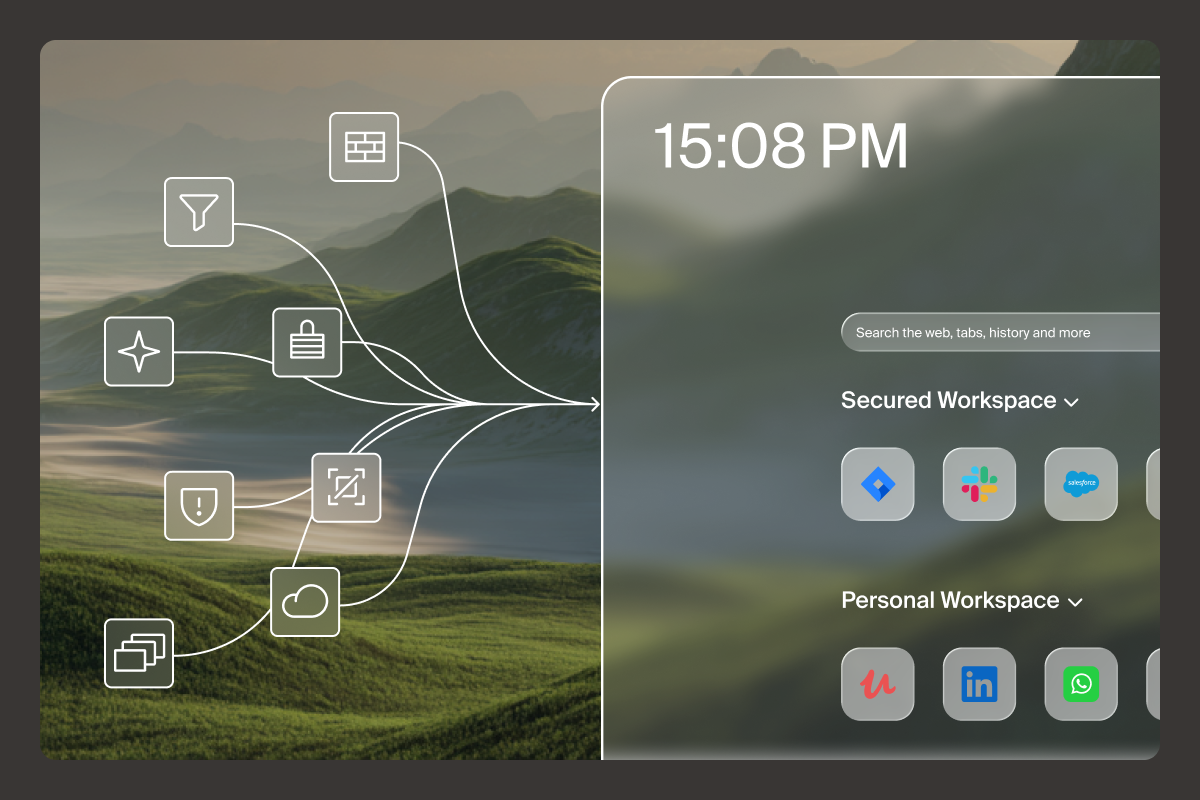
- An enterprise browser can enforce the same last-mile controls, including copy and paste restrictions, download and upload blocking, print controls, and screen capture prevention, inside the browsing session itself rather than inside a remote desktop.
- The Payment Card Industry Data Security Standard (PCI DSS) asks an assessor to validate segmentation, a recurring obligation under PCI DSS v4.0.1 regardless of whether the containment layer is a virtual desktop or a managed browser.
- The choice is matching each user group and application to the containment method already proven for it, then revalidating scope on that basis.
Most enterprise IT and security teams already have a VDI reduction conversation running somewhere in the organization, usually framed around cost and user experience. When the workloads in question touch the cardholder data environment, that conversation changes shape. Retiring a VDI pool that sits inside PCI scope is a scoping decision, and getting it wrong either expands an assessment unnecessarily or leaves unverified evidence an assessor will flag.
VDI's scope-reduction argument rests on keeping cardholder data and processing on the server side, away from the endpoint entirely. An enterprise browser can deliver that same last-mile containment for the share of cardholder data environment (CDE) access that's genuinely web and SaaS traffic, without the cost of standing up and maintaining virtual desktops for it.
Neither technology reduces scope by default. The rest of this piece sorts your current VDI use cases into the ones doing real containment work and the ones that are overhead.
Why PCI scope makes the VDI-vs-browser decision different
A generic VDI-replacement decision is mostly about cost per seat and the user-experience impact of the change. Add the cardholder data environment and the question becomes a PCI DSS scoping question, because the access method itself helps determine the system's PCI scope status. PCI DSS defines the CDE as any system that stores, processes, or transmits cardholder data, plus any system connected to or capable of affecting the security of that environment. That definition means the setup a team chooses for access is one of the load-bearing decisions in compliance. Our own PCI DSS compliance checklist walks through the twelve requirements that frame this, and scoping sits underneath nearly all of them: you can't apply the right controls to a system until you've correctly established the system's scope status.
That's why a VDI-to-browser conversation inside the CDE needs a different starting question than the one IT usually asks about desktop virtualization. The question shifts from whether a user notices to the proof the access method gives an assessor about cardholder data's possible paths. Once a team can answer that question in PCI terms, specifically naming the access paths that touch the CDE and the reason each one does, they have the facts needed to evaluate either approach on its merits rather than on habit.
Where VDI still fits in a PCI environment
Organizations have relied on VDI in PCI environments because the virtual desktop runs in a data center or cloud environment they control. Cardholder data and the applications that touch it stay on that server-side infrastructure, and the endpoint only ever receives pixels. A compromised laptop, in that model, never had local access to anything worth stealing, provided clipboard, drive, and printer redirection stay locked down. Segmentation around the virtual desktop pool, enforced through network controls and access policies, is also a pattern most assessors have seen many times, which keeps the validation conversation familiar rather than novel.
Our breakdown of VDI compared with DaaS (Desktop as a Service) splits the use cases in two: the ones where server-side isolation does genuine work, and the ones where VDI is just the vehicle an organization uses to reach a web application. The first category, legacy thick-client software that can't run anywhere else, or workflows that require full desktop-level control, is where VDI's server-side isolation meets the PCI DSS justification for using it. The second category is where the scope-reduction argument stops holding, because a remote desktop that's doing nothing but hosting a browser tab isn't adding containment beyond the controls a managed browser already enforces.
Where VDI adds cost and risk without shrinking scope further
In most organizations, 80 to 90 percent of the applications users reach through VDI are web-based, a pattern we see consistently across the environments we work in and cover in more depth in our VDI reduction strategies research. That statistic matters for a PCI program specifically because none of that overhead buys additional scope containment once the CDE boundary is already set through segmentation.
The organization is still paying for virtual desktop licensing, server infrastructure, image management, and the operational burden of patching and maintaining a desktop fleet that exists purely to run a browser inside it. That cost accumulates without a corresponding compliance benefit. It adds operational risk of its own, too: every additional layer in the access path is one more thing to patch, monitor, and explain to an assessor when something goes wrong. A VDI pool that's serving browser-only workloads inside the CDE boundary is a reasonable target for a second look, because that use case costs more and adds complexity beyond what its containment role needs.
What an enterprise browser changes at the last mile
Where VDI contains risk by keeping everything server-side, an enterprise browser contains it by enforcing controls directly inside the session where the work happens. Copy and paste restrictions, download and upload blocking, print controls, screen capture prevention, and watermarking can all run as policy inside the browser itself, the same category of controls covered in our rundown of legacy systems teams have reduced or replaced with Island.
For a user accessing a payment processing dashboard or a SaaS application that touches cardholder data, the containment follows the session instead of the remote desktop. We've gone through this ourselves: we hold a PCI DSS Level 1 Service Provider assessment, which has meant building and demonstrating last-mile enforcement that holds up under the same assessor scrutiny a VDI boundary faces. The comparison an IT or security leader needs to make here isn't abstract. For each application or user group currently routed through VDI, check whether last-mile browser enforcement meets the same intent as the current VDI-based control, control by control, rather than assuming either approach by default.
Building a scope-reduction program around segmentation
None of this works without segmentation doing its job, and PCI SSC is direct about the implication. Segmentation is optional under PCI DSS, but a system is presumed in scope until segmentation is demonstrated to isolate it from the cardholder data environment. That's the standard laid out in the Council's own guidance on PCI DSS scoping and network segmentation. Where an organization relies on segmentation to reduce scope, an assessor has to verify the effectiveness of those segmentation controls. That verification isn't a one-time event. PCI DSS v4.0.1 requires penetration testing of any segmentation an organization relies on at least every twelve months under Requirement 11.4.5, or every six months for service providers under Requirement 11.4.6, a cadence Akati Consulting's analysis of the segmentation requirement confirms.
That cadence applies regardless of containment layer; the obligation covers enterprise browser deployments as much as VDI deployments. Organizations in financial services and other heavily regulated industries already live with this rhythm. The outsourcing provider Teleperformance offers a useful reference point: it reduced its VDI dependency across its global operations while maintaining PCI DSS compliance by validating segmentation around its new setup rather than assuming the new technology needed no validation.
A decision framework for IT and security leaders
Put together, the evidence points toward a split rather than a wholesale migration in either direction. VDI still fits where full desktop control is genuinely required, where legacy applications can't run any other way, or where an organization already has validated segmentation around a pool that's doing real containment work. We cover this in more detail across our VDI and DaaS reduction guidance and in our broader look at alternatives to traditional VDI. Access that's browser-only, SaaS-heavy, contractor-driven, or bring-your-own-device (BYOD) inside the CDE boundary is the stronger candidate for an enterprise browser, since that's exactly the workload category where VDI has been carrying overhead without adding containment.
Either direction an organization moves, scope needs revalidating against the new setup rather than carried forward from the old one. Our modern alternative to VDI walks through that step for teams building the case internally. The practical starting point is a phased pilot. Pick one browser-only, non-legacy user group that currently sits inside the CDE boundary, move it to last-mile browser enforcement, and validate that segmentation with the same rigor an assessor would apply to a VDI pool, before touching the rest of the VDI footprint.
FAQs
Does moving from VDI to an enterprise browser automatically reduce PCI DSS scope?
No. Neither approach reduces scope on its own; segmentation is what does that work, as covered above. Swapping the access technology without revalidating it leaves the assessor with nothing new to confirm, which means the scope claim doesn't hold up by itself.
Can an enterprise browser satisfy PCI DSS segmentation requirements by itself?
An enterprise browser can enforce the last-mile controls, like copy and paste restrictions, download and upload blocking, and screen capture prevention, that keep cardholder data from leaving a session. Segmentation itself is a broader claim that also depends on network controls and access policy, so the browser is one piece of the evidence in the whole case an assessor needs to see.
Which CDE use cases still make the most sense on VDI instead of a browser?
Legacy thick-client applications that can't run any other way, and workflows that genuinely require full desktop-level control, are where VDI's server-side isolation is still doing real containment work. Our VDI compared with DaaS breakdown goes through this distinction in more detail. If a VDI session is only launching a browser to reach a web or SaaS application, that's the use case worth moving.
How often does segmentation need to be re-validated under PCI DSS v4.0.1?
PCI DSS v4.0.1 requires penetration testing of any segmentation an organization relies on at least every twelve months under Requirement 11.4.5, or every six months if the organization is a service provider under Requirement 11.4.6. That cadence doesn't change based on whether the containment layer is a virtual desktop pool or a managed browser session; it's an obligation tied to the segmentation claim itself.
Do contractors and BYOD users accessing the CDE through an enterprise browser change how an assessor views scope?
Contractor and BYOD access is one of the stronger candidates for an enterprise browser specifically because it's often browser-only and SaaS-heavy already, the workload category VDI has historically been carrying without adding containment. An assessor still needs the same segmentation evidence for that access path as for any employee device. The change in approach moves the enforcement point for last-mile controls; it doesn't remove the validation step.
What's the practical difference between VDI and DaaS when PCI scope is the deciding factor?
DaaS is a delivery model for virtual desktops, so it follows the same scope logic as VDI. Cardholder data and processing stay server-side, and segmentation around that environment still has to be demonstrated. Our VDI compared with DaaS piece covers the cost and management differences between the two, but neither one changes the underlying PCI DSS segmentation obligation.
How should an IT or security leader start a pilot without disrupting existing PCI validation?
Pick one browser-only, non-legacy user group that currently sits inside the CDE boundary rather than attempting a wholesale cutover. Move that group to last-mile browser enforcement, then validate the resulting segmentation with the same rigor an assessor would apply to a VDI pool before touching the rest of the VDI footprint. That sequence keeps the existing VDI-based validation intact for everything not yet migrated, so the pilot adds evidence instead of creating unverified exposure.

Island is defining the future of work for people and AI agents. Its enterprise agentic control plane helps organizations enable, govern, and audit agentic workforces alongside people. Island boosts productivity across devices, browsers, applications, networks, and data while protecting sensitive information, simplifying access, and helping enterprises scale AI safely.